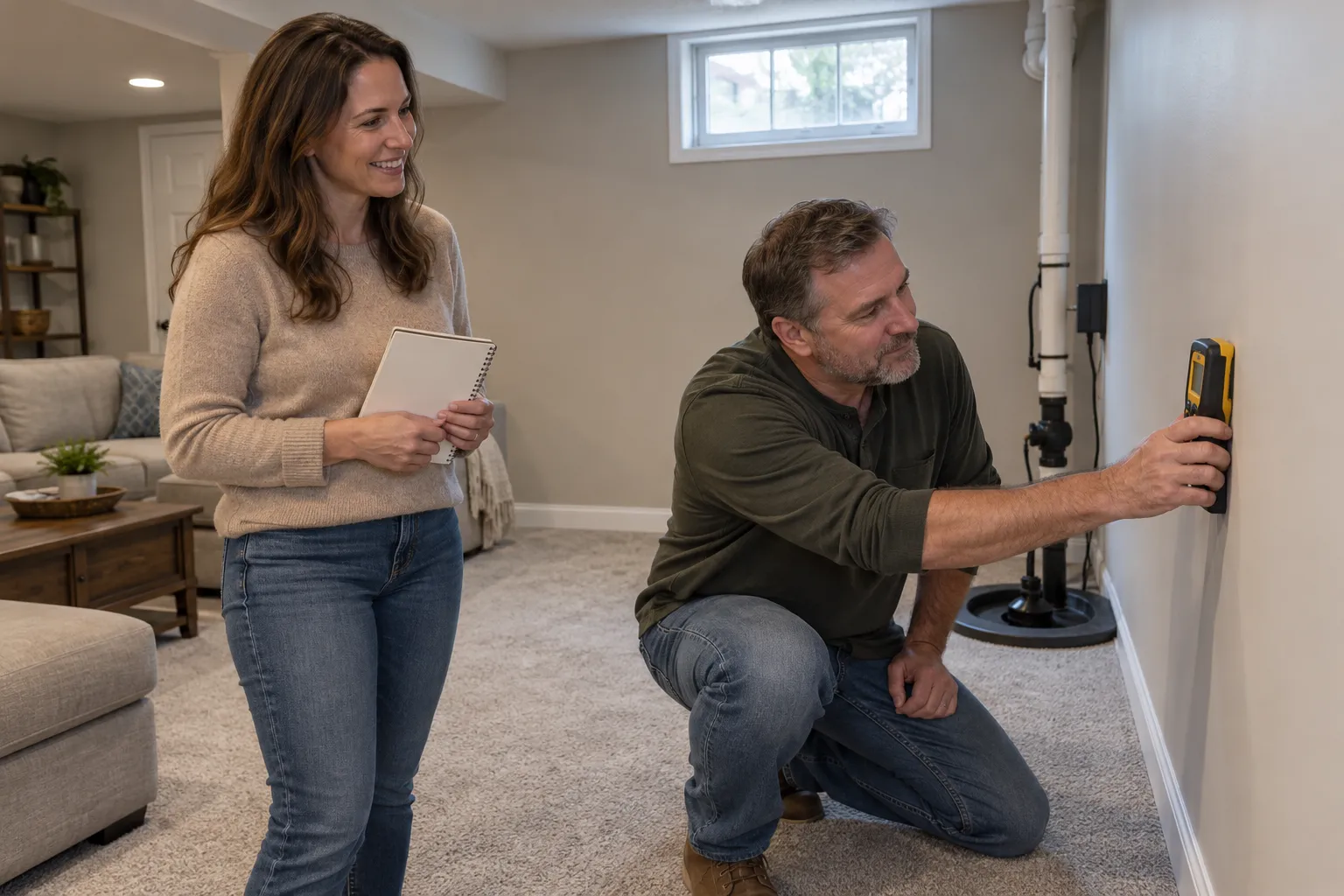
A musty smell or a dark patch can leave you guessing, and guessing gets expensive. A mold inspection replaces that guess with facts. A provider in our network checks the visible areas, measures moisture, and looks for the leak or humidity that feeds the growth.
Testing adds detail. Air or surface samples go to a lab, and the report shows what kind of mold is present and how much. You get a written summary you can use to compare quotes. Premiumcharlotte Mold Help is a referral service. We connect homeowners in Milwaukee and the Milwaukee area with independent local providers. The providers do the inspecting and testing, and you decide what happens next.
Spotted Something? Start Here
Maybe you smell something musty. Maybe you see dark spots on a wall. Take a breath. A spot is not always mold, and mold is not always a disaster. An inspection tells you what is really going on.
Hold off on scrubbing, spraying or sanding. That can spread spores and wipe out clues the inspector needs.
Early Signs Worth Acting On
Catch it early. Small signs are cheap to check and costly to ignore.
- A damp, earthy smell in a basement or closet
- Paint that bubbles, peels or looks stained
- Musty air after a big storm or a spring thaw
- Window sills that stay wet in humid summers
- Stuffy noses or itchy eyes that ease when you leave home
What You Can Safely Do Yourself
You can help before anyone visits, and it costs very little.
- Wipe up small spills and fix a dripping pipe
- Run a dehumidifier in damp rooms
- Check that your sump pump kicks on
- Clear gutters so water moves away from the walls
- Take dated photos and notes
Where You Need a Pro
Testing is not a good DIY job. Store-bought kits can show that spores exist. They exist in every home. They do not show how much, where it grows, or why.
Hidden moisture behind walls needs meters and trained eyes. Skip the DIY route if the area is bigger than about ten square feet, if sewage or flood water was involved, or if someone at home has asthma or a weak immune system.
When an Inspection Makes Sense
Book one if you see growth you cannot explain. Book one after a flood, a roof leak or a burst pipe. It also helps before you buy a house, after a long damp spell, or when the smell keeps coming back.
Older frame houses, bungalows and ranch homes with full basements often have moisture trouble. Cold winters and humid summers do not help.
What Happens During the Visit
The provider starts with a walk-through and a few questions. Then they look at ceilings, walls, floors, attics, crawl spaces and basements.
They use a moisture meter. Many also use a thermal camera to spot wet areas you cannot see. The goal is simple: find the mold and find the water source.
Types of Mold Testing
Air Samples
A pump pulls air through a small cartridge. A lab counts spores. Results are often compared with a sample taken outside.
Surface Samples
A swab or tape lifts material from a stain. The lab names the mold type. This is useful when something looks suspicious.
Moisture Readings
These cost little and tell a lot. Mold needs water. If the wall is dry, the fix is different.
If you want certified mold testing, ask the provider what training they have and which lab they use.
Making Sense of Your Results
A good report is plain. It lists where samples came from, what the lab found, and what the provider suggests.
The words black mold scare people. Color alone does not tell you the type or the risk. Let the lab report and the provider explain it.
Inspection and Remediation: Together or Apart?
Some homeowners hire one company for both jobs. That is simple, but it can be a conflict of interest. Others hire an inspector first, then collect quotes for black mold remediation or residential mold removal.
Separate steps cost a bit more upfront. They also give you a neutral scope to compare. Quote, then compare.
Price the Problem
Cost depends on home size, the number of samples, and how hard the spaces are to reach. Lab fees are often extra. Always ask for a written quote that lists what is included.
How to Prepare for Your Inspection
- Clear a path to the basement, attic and utility areas
- Move boxes away from walls that look damp
- Write down when you first noticed the problem
- Note any past leaks, floods or repairs
- Keep windows closed for a day before air sampling if the provider asks
- Do not clean the suspect area first
Questions to Ask the Provider
- What training and lab do you use for testing?
- How many samples are in the price?
- Will I get a written report with photos?
- Will you look for the moisture source?
- Are you also selling the cleanup work?
If you search mold inspection near me, compare at least two written quotes. A fair price is clear about what you get.
Insurance Notes
Some policies may cover sudden damage. Check your policy. Providers can often help document damage for a claim.
What's Included
Moisture Check
Meters and cameras help the provider find damp spots and hidden leaks behind walls and floors.
Air and Surface Sampling
Samples go to a lab so you can see what is present.
Written Findings Report
You get notes, photos and lab results you can use to compare quotes.
Next Steps
The provider explains whether cleanup is needed, what the scope looks like, and what to fix first.
What Mold Inspection and Testing Usually Costs
These are typical U.S. ranges. Your price depends on home size, access and lab fees. Always ask for a written quote that lists what is included, then compare two or three.
| Item | Typical range | Notes |
|---|---|---|
| Basic visual inspection | $300 – $500 | Small to mid-size home, no lab work |
| Full home inspection with report | $400 – $1,000 | Larger homes cost more |
| Air sample (each) | $50 – $150 | Often an outdoor sample is added |
| Surface or swab sample (each) | $40 – $100 | Good for a single stain |
| Thermal camera or moisture mapping | $150 – $500 | Sometimes included in the visit |
| Clearance testing after cleanup | $200 – $600 | Confirms the work area is clean |
How It Works
Share Your Situation
Tell us what you see, smell or suspect, and where in the home.
Get Matched
We connect you with an independent local provider in our network.
Review the Written Quote
Check what is included, how many samples, and whether lab fees are extra.
Inspect, Test and Decide
The provider visits, shares results, and you choose the next step.
Why Call Premiumcharlotte Mold Help
Clear Facts
You learn what is growing and where, so you do not pay for guesses or extra work.
Fair Comparisons
A written scope lets you compare quotes on equal terms.
Smaller Repairs
Finding moisture early often means a smaller fix and a lower bill.
Local Providers
Independent providers near you know area homes, basements and weather.
Other Services
Need mold inspection & testing services in Milwaukee?
Questions about a musty smell or a dark patch? Request a callback to check provider availability, or send a quick estimate request.
No obligationMold Inspection & Testing Services FAQ
How much does a mold inspection cost?
Typical U.S. prices run from about $300 to $1,000, depending on home size and how many samples go to the lab. Lab fees are sometimes extra. Get a written quote that lists everything, and compare a few before you book.
Can I test for mold myself?
Hardware-store kits can show that spores are present, but spores are in every home. They do not show how much there is or where it comes from. A provider can do more.
Do I need testing if I can already see mold?
Not always. Visible mold may be enough to plan cleanup. Testing and moisture checks help when you are unsure, when growth may be hidden, or when you want a neutral report before comparing quotes.
Get in touch
Questions about a musty smell or a dark patch? Request a callback to check provider availability, or send a quick estimate request.
No obligation